
Introduction
Artificial Intelligence (AI) is revolutionizing digital marketing. From content creation and customer segmentation to predictive analytics and automated advertising, AI enables businesses to deliver faster, smarter, and more personalized marketing campaigns than ever before.
However, as AI becomes more deeply integrated into marketing strategies, one challenge stands out: maintaining human trust.
Consumers appreciate convenience and personalization, but they also value authenticity, transparency, and genuine human interactions. Businesses that rely too heavily on automation risk creating experiences that feel impersonal or misleading.
The future of digital marketing is not about replacing humans with AI—it’s about finding the right balance between AI-driven efficiency and human creativity, empathy, and ethical decision-making.
The Rise of AI in Digital Marketing
AI is transforming nearly every aspect of marketing, including:
Content generation
Email marketing automation
Customer segmentation
Chatbots and virtual assistants
Predictive analytics
Personalized product recommendations
Social media management
Paid advertising optimization
Lead scoring
Customer journey automation
These technologies help businesses improve efficiency, reduce costs, and deliver better customer experiences.
Why Human Trust Matters
Trust is the foundation of every successful customer relationship.
Customers are more likely to buy from brands they believe are:
Honest
Transparent
Reliable
Authentic
Secure
Customer-focused
While AI can automate many tasks, it cannot fully replace the emotional intelligence, empathy, and ethical judgment that humans bring to customer interactions.
Without trust, even the most advanced AI-powered campaigns can fail.
Benefits of AI Automation
Faster Decision-Making
AI processes massive amounts of data within seconds, helping marketers make informed decisions quickly.
Personalization at Scale
AI analyzes customer behavior and delivers highly relevant recommendations, emails, advertisements, and website experiences for millions of users simultaneously.
Improved Efficiency
Routine marketing tasks such as campaign scheduling, reporting, audience segmentation, and lead nurturing can be automated, allowing teams to focus on strategy and creativity.
Better Customer Insights
Machine learning identifies patterns that humans may overlook, helping businesses understand customer preferences and predict future behavior.
Higher Marketing ROI
AI continuously optimizes campaigns by adjusting bids, budgets, targeting, and creative assets based on real-time performance data.
The Risks of Over-Automation
Although AI offers many advantages, excessive automation can create problems.
Loss of Authenticity
Customers can often recognize generic AI-generated content. If every interaction feels automated, brands may appear impersonal.
Reduced Human Connection
Complex customer concerns often require empathy, active listening, and personalized support that AI alone cannot provide.
Privacy Concerns
Consumers are increasingly aware of how companies collect and use personal data. Misusing customer information can damage trust and brand reputation.
Bias in AI Systems
AI models learn from historical data. If that data contains bias, marketing decisions may unintentionally discriminate against certain customer groups.
Lack of Transparency
Customers may lose confidence if they cannot distinguish between AI-generated recommendations and genuine human advice.
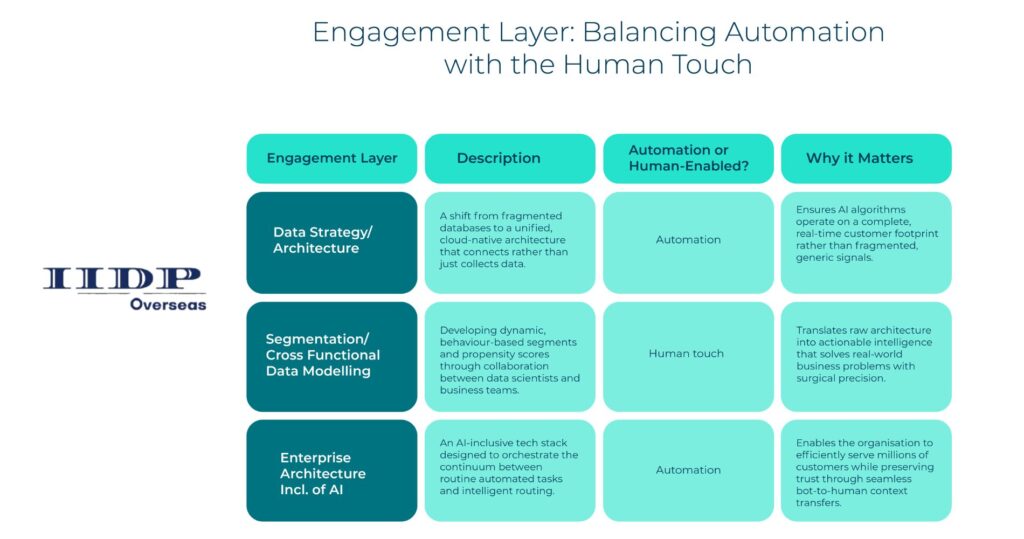
How to Balance AI Automation with Human Trust
1. Be Transparent About AI Usage
Inform customers when AI is being used for:
Chatbots
Product recommendations
Content generation
Customer support
Personalized marketing
Transparency builds credibility and helps customers understand how AI enhances their experience.
2. Keep Humans in the Decision-Making Process
AI should support—not replace—human expertise.
Marketing professionals should review:
Campaign strategies
Sensitive communications
Customer complaints
Brand messaging
Ethical decisions
Human oversight helps prevent costly mistakes and ensures marketing aligns with brand values.
3. Use AI for Repetitive Tasks
AI is most effective when handling repetitive, data-driven work such as:
Email automation
Audience segmentation
Lead scoring
Campaign optimization
Analytics reporting
This allows marketers to focus on creativity, storytelling, and relationship building.
4. Create Authentic Content
AI can assist with research, outlines, and first drafts, but human editors should add:
Personal insights
Industry expertise
Real-world examples
Brand voice
Emotional storytelling
This combination improves quality and builds trust with audiences.
5. Protect Customer Data
Businesses should:
Collect only necessary information.
Follow applicable privacy regulations.
Use secure systems to store customer data.
Clearly explain how customer information is used.
Give users control over their data where possible.
Strong privacy practices reinforce customer confidence.
6. Monitor AI Performance Regularly
AI models should be evaluated continuously to ensure they remain:
Accurate
Fair
Relevant
Unbiased
Consistent with business goals
Regular audits help identify issues before they affect customers.
Real-World Examples
E-commerce
AI recommends products based on browsing history, while customer service teams handle complex return requests and complaints that require empathy and judgment.
Banking
AI detects suspicious transactions in real time, but human advisors guide customers through important financial decisions.
Healthcare
AI assists with appointment scheduling and administrative tasks, while doctors provide diagnosis, treatment, and compassionate patient care.
Education
AI personalizes learning recommendations and assessments, while instructors mentor students, answer questions, and provide meaningful feedback.
The Future of AI and Human Collaboration
The future of digital marketing is not fully automated—it is collaborative.
Successful businesses will combine:
AI-driven efficiency
Human creativity
Ethical decision-making
Emotional intelligence
Customer-centric communication
Rather than replacing marketers, AI will become a powerful partner that enhances productivity and supports better decision-making.
Best Practices for Businesses
To build trust while leveraging AI, organizations should:
Use AI to improve—not replace—the customer experience.
Maintain transparency about AI-powered interactions.
Invest in employee training for responsible AI use.
Ensure human review of sensitive communications.
Prioritize customer privacy and data security.
Regularly evaluate AI systems for accuracy and fairness.
Continuously gather customer feedback to improve experiences.
Conclusion
Artificial Intelligence is transforming digital marketing by making campaigns more efficient, personalized, and data-driven. However, long-term success depends on more than automation alone.
Customers continue to value authenticity, transparency, empathy, and human connection. Businesses that combine the speed and intelligence of AI with the creativity and judgment of people will be better equipped to build lasting relationships and sustainable growth.
The goal is not to choose between AI and humans—it is to create a partnership where technology enhances human expertise, allowing brands to deliver exceptional experiences while earning and maintaining customer trust.